
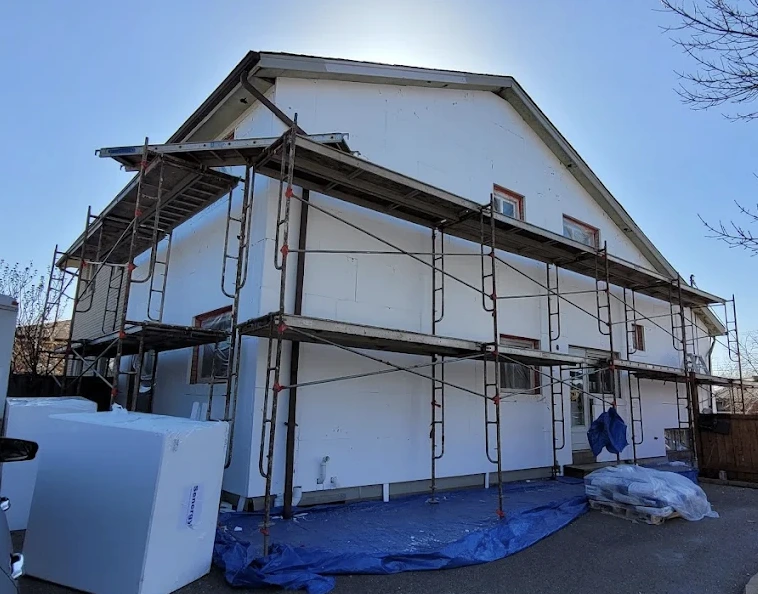
When you are choosing a stucco finish for your Austin home, your contractor may ask whether you prefer a 20/30 or 30/30 finish. These numbers refer to the size of the sand aggregate in the finish coat, and they produce distinctly different textures and appearances. Understanding the difference helps you make a confident choice that matches the look you want.
What the Numbers Mean
The numbers 20/30 and 30/30 describe the mesh size of the sand used in the stucco finish coat. This is a grading standard based on the size of the screen the sand passes through:
- **20/30 sand** passes through a 20-mesh screen but is retained on a 30-mesh screen. The grains are coarser, roughly 0.6 to 0.85 millimeters in diameter.
- **30/30 sand** passes through a 30-mesh screen. The grains are finer, roughly 0.6 millimeters and smaller.
The larger the first number, the coarser the sand. This directly affects the texture, appearance, and feel of the finished wall.
20/30 Finish: Coarser Texture
A 20/30 finish uses larger sand grains, producing a more pronounced, textured surface. This is the most common stucco finish on residential homes across Austin, particularly in established neighborhoods like Barton Hills, Travis Heights, and Circle C Ranch.
**Characteristics:** - Visible, tactile grain — you can feel the individual sand particles when you run your hand across the wall - Better at hiding minor surface imperfections, patches, and repairs - Casts subtle shadows across the surface, adding depth and visual interest - Slightly more forgiving during application, making it easier to achieve a consistent look across large wall areas
**Best for:** - Traditional Texas homes where a classic stucco look is desired - Repair and patching work where blending with the existing texture is important - Homeowners who prefer a more rustic, handcrafted appearance
30/30 Finish: Finer Texture
A 30/30 finish uses smaller sand grains, resulting in a smoother, more refined surface. This finish has become increasingly popular on modern and contemporary homes in neighborhoods like Mueller, East Austin, and the newer developments in Cedar Park and Georgetown.
**Characteristics:** - Smoother, more uniform appearance with less visible grain - Tighter surface that feels less rough to the touch - Shows imperfections more readily — requires more skill during application - Creates a cleaner, more modern aesthetic
**Best for:** - Contemporary and modern architectural styles - Homes where a smooth, refined look is the priority - Areas with minimal foot traffic or impact risk (the finer surface can show dents and dings more easily)
Side-by-Side Comparison
| Feature | 20/30 Finish | 30/30 Finish |
|---|---|---|
| Sand grain size | Coarser (0.6–0.85 mm) | Finer (0.6 mm and smaller) |
| Texture | More pronounced, tactile | Smoother, more uniform |
| Appearance | Traditional, rustic | Modern, refined |
| Hides imperfections | Better | Less forgiving |
| Ease of application | More forgiving | Requires more skill |
| Repair blending | Easier to match | Harder to match exactly |
| Popularity in Austin | Most common on traditional homes | Growing on modern builds |
How Austin's Climate Affects the Choice
Both finishes perform equally well in Austin's heat and UV exposure. The sand size does not affect durability, water resistance, or lifespan — those are determined by the stucco system (3-coat vs. 1-coat), the quality of installation, and proper curing.
One practical consideration: a coarser 20/30 finish collects slightly more dust and pollen, which is noticeable during Austin's heavy cedar and oak pollen seasons. A 30/30 finish is marginally easier to clean with a pressure washer, though both respond well to periodic washing.
Can You Mix or Customize?
Yes. Some homeowners choose a 20/30 finish on the main body of the house and a smoother 30/30 or even a float finish on accent areas, columns, or trim bands. This creates visual contrast and highlights architectural details. Your contractor can also adjust the application technique — for example, using a 20/30 sand but floating it smoother for a hybrid look.
Which Should You Choose?
If you want a classic Texas stucco look that forgives small imperfections and blends well with repairs over time, go with 20/30. If you prefer a contemporary, clean-lined appearance and your home's architecture supports it, choose 30/30.
Either way, the finish is only as good as the applicator. Consistent technique across the entire wall area is what separates a professional job from an amateur one.
Talk to a Local Expert
At Star Stucco of Austin, we apply both 20/30 and 30/30 finishes daily across Central Texas. We can bring samples to your property so you can see and feel the difference in person before committing. As your local stucco finishing contractor in Austin, we will help you choose the texture that fits your home and your neighborhood. Contact us for a free consultation or call (512) 706-9699.
Frequently Asked Questions
What does 20/30 mean in stucco?
The numbers 20/30 refer to the mesh size of the sand used in the stucco finish coat. The sand passes through a 20-mesh screen but is retained on a 30-mesh screen, producing grains roughly 0.6 to 0.85 millimeters in diameter. This creates a coarser, more textured finish.
Is 30/30 stucco smoother than 20/30?
Yes. A 30/30 finish uses finer sand grains, producing a smoother, more uniform surface. It is popular on modern and contemporary homes. A 20/30 finish has a coarser, more traditional texture that is better at hiding imperfections and blending repairs.
Which stucco finish is more popular in Austin?
The 20/30 finish is the most common on traditional Austin homes. The finer 30/30 finish is growing in popularity on modern builds and contemporary renovations, especially in newer neighborhoods like Mueller and East Austin.