
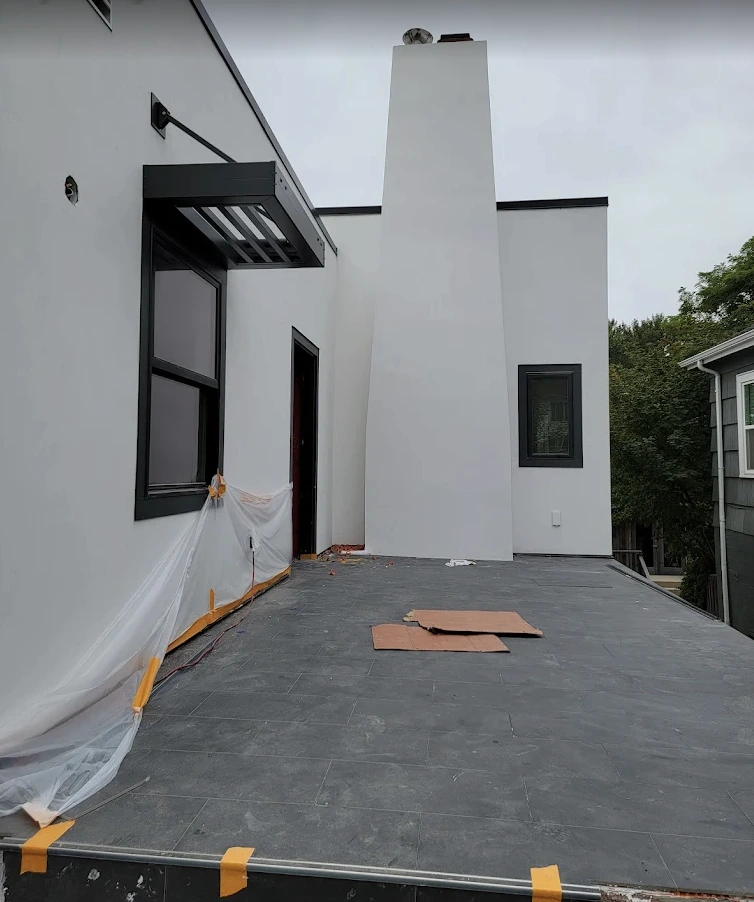
When Austin homeowners are choosing an exterior cladding material, the debate often comes down to traditional stucco versus fiber cement (Hardie Board). Both are popular choices throughout Travis County, but they offer very different advantages depending on your home's style, location, budget, and how long you plan to stay in the property.
Austin's climate adds another layer to this decision that homeowners in milder parts of the country simply don't face. With sustained summer heat, significant humidity swings between seasons, occasional hail, and the notorious expansive clay soils that cause foundation movement across much of the metro, your exterior material needs to perform across a demanding range of conditions. Let's break down both options honestly.
Stucco: The Timeless Choice for Austin Homes
Stucco has been a staple of Texas architecture for centuries, and for good reason. In Austin neighborhoods like Westlake Hills, Barton Creek, Lakeway, and Tarrytown, stucco homes command premium prices and blend naturally with the Hill Country landscape and Spanish Colonial architectural tradition that defines much of the region.
**Pros of stucco for Austin homes:** - Seamless, monolithic appearance with no visible seams or joints - Excellent thermal mass — stucco walls absorb heat during the day and release it slowly at night, helping regulate indoor temperatures during Austin's brutal summers - Infinite color options mixed directly into the material — the color doesn't peel because it goes all the way through. See our stucco finishing options - Can last 50+ years with proper maintenance and professional installation - Fire resistant, pest proof, and mold resistant - Adds measurable resale value in Austin's premium neighborhoods
**Cons of stucco:** - Requires highly skilled installation — a poorly applied stucco job will crack prematurely, which is why choosing an experienced Austin stucco contractor matters enormously - More susceptible to cracking when there is significant foundation movement (a real concern in Austin given the clay soils) - Repairs require color matching expertise to blend seamlessly with the aged surface
Hardie Board: The Modern Alternative
Fiber cement siding has gained considerable popularity in newer Austin developments like Mueller, the Domain area, Whisper Valley, and master-planned communities in Round Rock and Cedar Park. It's a legitimate material with real advantages, but it's important to understand where those advantages actually apply.
**Pros of Hardie Board:** - Lower initial installation cost than full stucco in many cases - Consistent factory finish makes quality control easier on large developments - Individual boards can be replaced if one section is damaged - Resistant to insects and rot when properly installed and painted - Comes pre-primed from the factory
**Cons of Hardie Board in Austin's climate:** - Visible seams and joints — this is an inherent characteristic of board-and-batten or lap siding products - Requires repainting every 10–15 years; the paint is what protects the material, and Austin's intense UV exposure accelerates paint degradation on south- and west-facing walls - Can absorb moisture at cut edges if those edges are not properly sealed — a common installation error in fast-paced residential construction - Expands and contracts at seams with Austin's significant temperature swings (cool Hill Country mornings to 105°F afternoons in summer), which can work caulk joints loose over time - Does not provide the same thermal mass benefit as stucco, meaning Austin's heat hits your interior walls more directly
Austin Climate Factors That Should Drive Your Decision
Austin's climate is genuinely hard on exterior materials. With an average of 228 sunny days per year and UV intensity that rivals much of the Southwest, exterior finishes degrade faster here than in most of the country. Temperature swings from cool winter mornings in the 30s to summer highs well above 100°F mean your exterior material cycles through significant thermal stress every year.
The clay soils across much of Austin — particularly in neighborhoods like East Austin, Circle C Ranch, Rollingwood, and areas along the Balcones Fault — cause foundation movement that few other Texas cities experience to the same degree. This movement transmits stress to exterior walls, and it's the primary reason stucco cracks in Austin. However, it's worth noting that all hard-coat exterior systems, including fiber cement board, will show cracking or joint separation in severe foundation movement situations. The difference is that stucco cracks can be expertly repaired and blended to be invisible, while Hardie Board joint damage often results in visible seam separation that's harder to address cleanly.
Cost Comparison: Stucco vs. Hardie Board in Austin
For a typical 2,000 sq ft Austin home, three-coat stucco installation generally runs $15,000–$25,000 depending on complexity, accessibility, and finish type. Hardie Board installation for a similar home often runs $10,000–$18,000 installed with paint. The initial gap narrows considerably when you factor in Hardie Board's repainting requirement every 10–15 years (typically $3,000–$6,000 each cycle) versus stucco's much longer maintenance interval.
Over a 30-year period, the total cost of ownership between the two options is often comparable — and stucco typically delivers higher resale premiums in Austin's luxury and mid-range markets.
Which Should You Choose?
For Austin homes with Mediterranean, Spanish Colonial, Hill Country, or contemporary stucco-friendly architecture, professional stucco installation is typically the stronger long-term investment. The combination of longevity, thermal performance, fire resistance, and resale value makes it hard to beat in the right application.
Hardie Board makes more sense for homes in a more traditional American farmhouse or craftsman style, or in situations where the budget requires a lower upfront cost and the homeowner plans to stay in the home for a shorter period.
The most important variable in either case is installation quality. A poorly installed stucco job or a poorly installed Hardie Board job will both fail prematurely. Whichever material you choose, vet your contractor carefully — check references, look at completed projects, and make sure they have experience with the specific material and the specific challenges of Austin's climate and soils.
If you're leaning toward stucco, visit our homepage to learn more about Star Stucco of Austin or go directly to our Austin stucco repair page to understand what to expect from ongoing maintenance. We offer free estimates throughout Travis County and the surrounding metro area.