
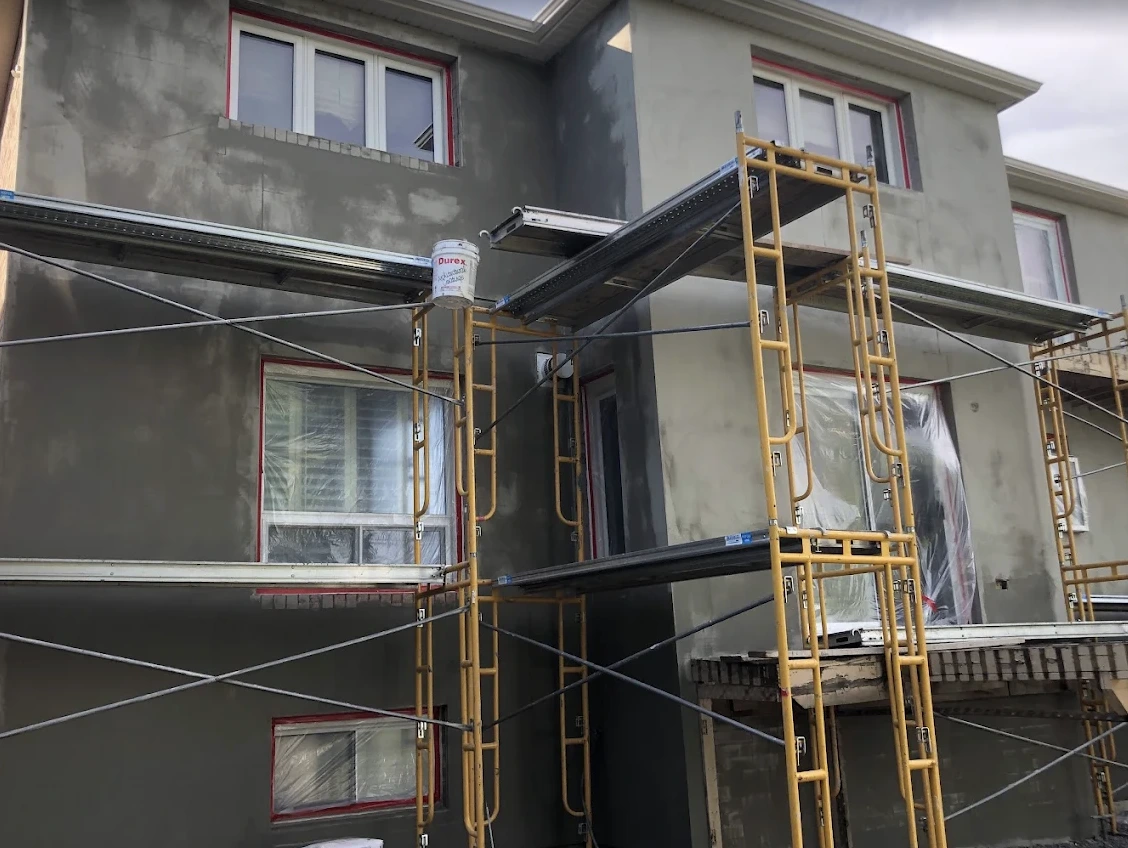
Water is the single biggest threat to a stucco exterior. A well-installed stucco wall sheds rain easily, but when water finds a way behind the surface — through a crack, a failed sealant joint, or a flashing defect — it can cause hidden damage that spreads for months before you see any sign from the outside. In Austin, where heavy spring rains, flash flooding, and high humidity collide with expansive clay soils, the risk is real and the consequences can be expensive.
This guide explains how water gets behind stucco, the damage it causes when it does, the warning signs to watch for both inside and outside your home, and the difference between a surface repair and a full remediation.
How Water Gets Behind Stucco
Stucco itself is not waterproof — it is designed to shed most water while allowing the small amount that does penetrate to drain out through a weather-resistive barrier and weep screed at the base of the wall. The system works well when every layer is intact. Problems start when one of these entry points fails:
- **Cracks** — Even hairline cracks can wick water into the wall, especially during a driving Central Texas thunderstorm. Cracks around windows and doors are the most common culprits.
- **Failed caulk and sealant** — The sealant around windows, doors, light fixtures, hose bibs, and AC line-set penetrations has a shorter lifespan than the stucco itself. Once it dries out and pulls away, water has a direct path behind the surface.
- **Flashing defects** — Missing or improperly installed kick-out flashing where a roof meets a wall, and head flashing above windows, are two of the most common sources of concealed water entry on Austin homes.
- **Missing or blocked weep screed** — The weep screed at the bottom of the stucco wall is designed to let moisture drain out. When it is buried by landscaping, covered by a patio slab, or simply missing, trapped water has nowhere to go.
- **Damaged weather-resistive barrier** — If the building paper or house wrap behind the stucco was torn during installation or has degraded over time, water that reaches it soaks into the sheathing instead of draining down and out.
What Water Does Once It Gets Behind Stucco
Trapped moisture behind stucco is destructive because it stays hidden:
- **Rots wood framing and sheathing** — Wet OSB and plywood lose structural strength, and the damage can spread well beyond the original entry point as water travels along framing members.
- **Promotes mold and mildew** — The warm, dark, damp space behind stucco is an ideal growth environment. Mold can spread through wall cavities and affect indoor air quality.
- **Corrodes metal lath and fasteners** — The wire lath that reinforces traditional stucco rusts when it stays wet, weakening the bond between stucco and wall.
- **Causes efflorescence and staining** — Mineral deposits get carried to the surface as water evaporates, leaving white streaks and discoloration.
- **Leads to delamination** — Persistent moisture can cause the stucco to separate from the substrate, creating bulges and bubbles that eventually crack and fall away.
In Austin, the problem is amplified by the clay soils that dominate much of the metro. When heavy spring rains saturate the ground, the clay swells and pushes against foundations, flexing walls and opening cracks that let even more water in. The cycle feeds on itself.
Exterior Warning Signs of Water Damage
Walk the outside of your home at least once a year — ideally in spring after the heavy rains — and look for:
- **Staining and discoloration** — Dark streaks or patches running down the wall, especially below windows, rooflines, and penetrations.
- **Efflorescence** — White crystalline deposits on the surface, indicating water is moving through the stucco and carrying salts to the exterior.
- **Cracks with staining** — A crack surrounded by discoloration is a strong indicator that water has been entering at that point.
- **Bulging or bubbling** — Areas where the stucco is pushing outward or feels soft and hollow when tapped suggest moisture is trapped behind the surface.
- **Mold or algae growth** — Green or black patches on the stucco, particularly on north-facing walls or shaded areas common in neighborhoods like Hyde Park and Zilker.
- **Crumbling or delaminating sections** — Stucco that is flaking, crumbling, or pulling away from the wall has likely lost its bond due to moisture.
Interior Warning Signs
Some of the most telling evidence of stucco water damage shows up inside the house:
- **Water stains on interior walls or ceilings** near exterior walls — especially around windows and where a roof meets a wall.
- **Peeling paint or bubbling drywall** on walls that back up to stucco exteriors.
- **Musty odor** in rooms along exterior walls, suggesting mold growth inside the wall cavity.
- **Soft or spongy drywall** when pressed near windows or corners.
If you see any of these interior signs, the damage behind the stucco may be more advanced than what is visible from outside.
Austin-Specific Risk Factors
Austin homeowners face several conditions that increase the risk of stucco water damage:
- **Heavy spring rains and flash flooding** — Central Texas is part of Flash Flood Alley, and intense storms can drive water into cracks and joints faster than the drainage plane can manage, especially if maintenance has been deferred.
- **Expansive clay soils** — The Blackland Prairie and Edwards Plateau soils across much of Austin, particularly in neighborhoods like East Austin, Circle C Ranch, and Pflugerville, swell and shrink with moisture cycles. This movement cracks stucco and opens paths for water entry.
- **Intense UV and thermal cycling** — The daily heat swing on a west-facing stucco wall in summer — from overnight lows near 75 degrees to surface temperatures exceeding 140 degrees by afternoon — works sealant joints and causes hairline cracks that admit water when the next rain arrives.
- **High humidity** — Austin's humidity, especially during spring and early fall, slows drying behind walls and encourages mold growth once moisture is present.
Repair vs. Remediation: What Is the Difference?
Not all water damage is the same, and the right response depends on how far the damage extends:
Surface Repair
When water damage is caught early — a stained crack, a small area of efflorescence, a failed sealant joint — a targeted repair may be all that is needed. The contractor seals the entry point, patches the affected stucco, and matches the texture and color. This is the most affordable fix and the reason regular inspections pay for themselves. Learn more about repair options on our stucco repair services page.
Full Remediation
When water has been entering for an extended period and has damaged the sheathing, framing, or weather-resistive barrier behind the stucco, the affected stucco must be removed entirely so the substrate can be inspected, dried, and repaired or replaced. The stucco system is then rebuilt from scratch with proper flashing, drainage, and a new weather-resistive barrier. This is a larger project, but it addresses the root cause rather than covering it up. Our stucco remediation page explains the full process.
The critical difference is that repair fixes the surface while remediation fixes the system. Choosing repair when remediation is needed just conceals the problem and lets damage continue behind the wall.
How to Protect Your Austin Home
A few preventive steps can dramatically reduce your risk:
- **Inspect annually** — Walk the exterior every spring and fall. Look for cracks, failed caulk, staining, and efflorescence.
- **Re-seal joints every 5 to 7 years** — Caulk around windows, doors, and penetrations has a limited lifespan. Replacing it proactively is far cheaper than repairing water damage.
- **Keep landscaping away from the weep screed** — Soil, mulch, and plants piled against the base of the stucco trap moisture and block drainage.
- **Address cracks immediately** — Even hairline cracks are water entry points. Sealing them early prevents the damage that turns a $400 repair into a $4,000 remediation.
- **Ensure proper grading** — The ground should slope away from your foundation so rainwater and flash-flood runoff drains away from the wall, not toward it.
Get a Free Water Damage Inspection
If you have noticed staining, cracks, soft spots, or any of the warning signs described above, do not wait for the next storm to make things worse. Star Stucco of Austin provides free, no-obligation inspections throughout the Austin metro. As your local stucco contractor in Austin TX and stucco remediation specialist, we will assess the damage, check for hidden moisture, and give you an honest recommendation — repair or remediation — with a clear cost estimate. Request a free inspection or call (512) 706-9699 today.
Frequently Asked Questions
How do I know if water is getting behind my stucco?
Look for exterior signs like dark stains below windows, white crystalline deposits (efflorescence), bulging or soft spots, and cracks with discoloration. Interior signs include water stains on walls that back up to stucco, peeling paint, and musty odors near exterior walls. Any of these warrants a professional moisture assessment.
What is the difference between stucco repair and remediation?
Repair addresses localized, surface-level damage — sealing a crack, patching a small area, and matching the finish. Remediation is a larger process where damaged stucco is removed entirely so the sheathing, framing, and weather-resistive barrier behind it can be inspected, repaired or replaced, and the stucco system rebuilt from scratch. Remediation is needed when water has penetrated beyond the stucco and damaged the substrate.
How much does stucco water damage repair cost in Austin?
Costs range widely depending on the extent of damage. Sealing a crack and patching a small area might run $300 to $600. Water damage repair where the substrate is involved typically costs $1,500 to $5,000 or more per section. Full remediation of a large area can exceed $8,000. A free on-site inspection gives you an accurate number.
Does Austin weather make stucco water damage more likely?
Yes. Austin sits in Flash Flood Alley and receives heavy spring rains that drive water into cracks and joints. The expansive clay soils across much of the metro cause foundation movement that opens cracks in stucco. Intense UV and daily temperature swings degrade sealant faster than in milder climates. Regular inspection and maintenance are especially important for stucco homes in Central Texas.