
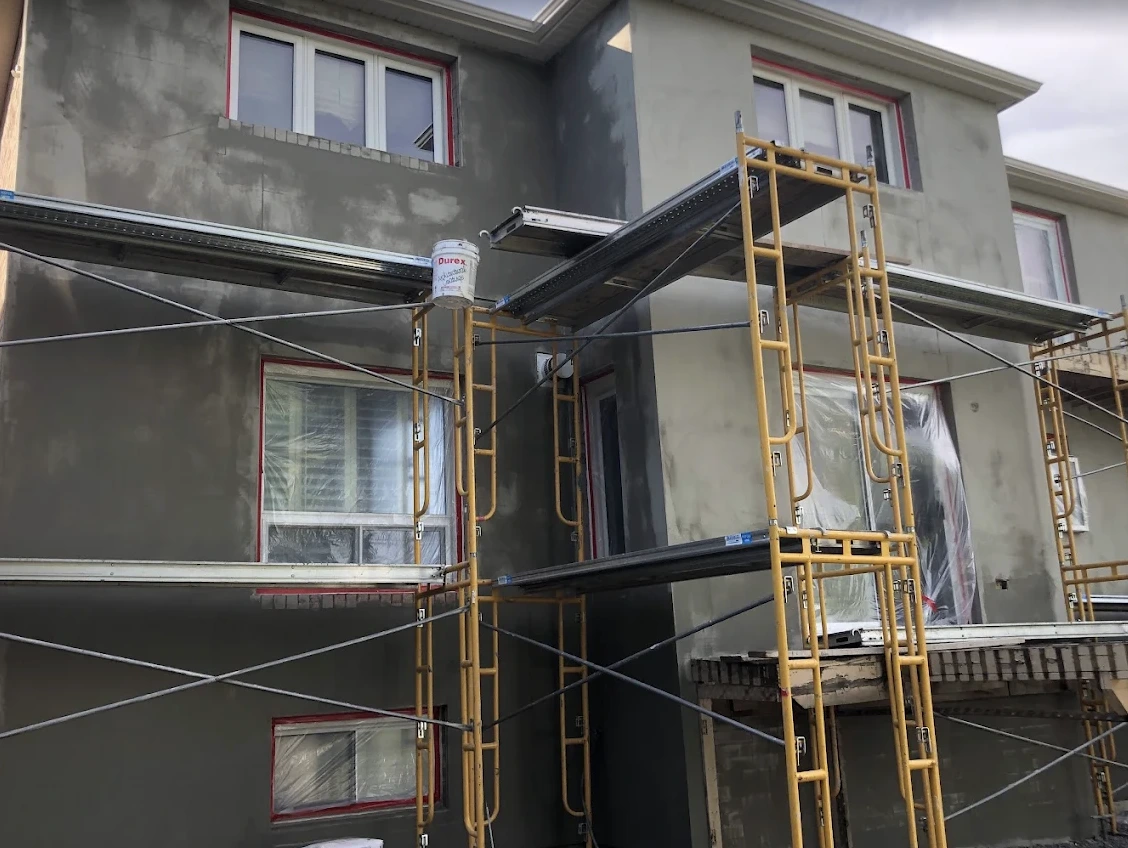
If you search for stucco online, you will find no shortage of horror stories: moisture damage behind walls, mold, cracks that keep coming back, and homeowners facing five-figure repair bills. These stories are real, but they paint an incomplete picture. The issue with stucco is almost never the material itself — it is what happens when stucco is installed incorrectly or maintained poorly.
Here is an honest breakdown of the real issues with stucco and why most of them are preventable.
The #1 Issue: Moisture Intrusion
Moisture getting behind the stucco and becoming trapped against the wall sheathing is the most serious and most expensive stucco problem. When this happens, the water has no path to escape, and it slowly degrades the sheathing, framing, and insulation. In severe cases, structural damage and mold remediation costs can exceed the value of the stucco work itself.
Why it happens:
- **Inadequate or missing flashing** around windows, doors, and roof-to-wall transitions — water runs down the wall and enters at these openings
- **Missing or improperly installed weep screeds** at the base of the wall — the bottom edge of the stucco needs a gap for moisture to drain out
- **No drainage plane** behind the stucco — modern building science requires a weather-resistive barrier and a drainage gap between the stucco and the sheathing
- **Cracks left unrepaired** — even small cracks allow water to wick behind the stucco, especially during Austin's heavy rain events
**The key insight:** Stucco is a porous material. It absorbs some water during rain. A properly designed system allows that water to drain out through the weep screed at the bottom. An improperly designed system traps it.
The #2 Issue: Cracking
All cement-based materials crack. This is a physical reality, not a defect. The question is whether the cracks are cosmetic (hairline, stable, not letting water in) or structural (growing, recurring, or allowing moisture intrusion).
Common causes of stucco cracking in Austin:
- **Foundation movement** from expansive clay soils — the ground swells when wet and shrinks when dry, stressing the rigid stucco exterior
- **Missing control joints** — control joints are planned weak points in the stucco that allow it to crack in a controlled, repairable location instead of randomly across the wall
- **Insufficient curing** — if the stucco dries too fast in Austin's summer heat, it shrinks and cracks prematurely
- **Wrong mix ratios** — too much water in the mix weakens the cement and increases shrinkage cracking
**How to manage it:** Hairline cracks in the first year are normal and can be sealed with elastomeric caulk or patching compound. Larger or recurring cracks need professional evaluation to determine the root cause.
The #3 Issue: Poor Installation
This is the underlying cause of most stucco problems. Stucco installation is a skilled trade, and shortcuts during application lead to premature failure. Common installation defects include:
- **Skipping the scratch coat** or applying it too thin
- **Not allowing adequate cure times** between coats (particularly the 7-day cure between brown coat and finish)
- **Improper lath installation** — lath that is not properly overlapped, fastened, or separated from the sheathing cannot support the stucco
- **No moisture barrier** — applying stucco directly to sheathing without building paper or house wrap
- **Wrong sand gradation** in the mix, leading to weak or inconsistent finish coats
The stucco industry saw a wave of these problems during rapid construction booms — including Austin's explosive growth over the past two decades. Homes built quickly by production builders with subcontracted stucco crews are more likely to have installation defects than homes built by dedicated stucco contractors.
The EIFS Problem (Largely Solved)
In the 1990s, EIFS (synthetic stucco) developed a terrible reputation for moisture damage, particularly in humid climates. Early EIFS systems used a "barrier" design that sealed moisture behind the wall with no way out. This caused widespread rot and mold damage, leading to class-action lawsuits and building code changes.
Modern EIFS uses a "drainage" design that includes a moisture management layer behind the insulation board. When installed correctly, today's EIFS systems perform well and manage moisture effectively. The old reputation persists, but the engineering has been fixed.
Learn more in our detailed guide: What is EIFS?
How to Avoid Stucco Problems
- **Hire an experienced, dedicated stucco contractor** — not a general contractor who subcontracts stucco work to the lowest bidder
- **Insist on a 3-coat system** with proper cure times between coats
- **Verify flashing and weatherproofing** are installed correctly before stucco application begins
- **Require control joints** at appropriate intervals and around all openings
- **Inspect annually** and repair cracks before they become moisture pathways
- **Maintain drainage** around the foundation to minimize soil-related movement
When Stucco Problems Already Exist
If your Austin home already has stucco issues — recurring cracks, staining, soft spots, or signs of moisture — the first step is a professional inspection to determine the scope. Minor issues can be repaired. Widespread moisture damage may require stucco remediation, which involves removing the stucco, repairing the substrate, and re-applying a properly designed system.
At Star Stucco of Austin, we inspect, repair, and remediate stucco problems across Central Texas. As your local stucco repair contractor in Austin, we diagnose the root cause before recommending a fix — we do not just patch over symptoms. Contact us for a free inspection or call (512) 706-9699.
Frequently Asked Questions
Why does stucco have a bad reputation?
Most stucco problems stem from poor installation — not the material itself. Inadequate flashing, missing moisture barriers, skipped cure times, and lack of control joints cause moisture intrusion and cracking. When installed correctly by an experienced contractor, stucco is one of the most durable and long-lasting exterior finishes available.
Is stucco bad for houses?
No. Stucco is an excellent exterior finish when installed correctly. It is fire-resistant, durable, and attractive. Problems arise from installation defects and deferred maintenance, not from the material itself. A properly installed 3-coat stucco system can last 50 to 80 years.
What causes stucco to fail?
The most common causes of stucco failure are moisture intrusion from inadequate flashing, cracking from foundation movement or missing control joints, and installation defects like insufficient cure times or missing moisture barriers. Regular inspection and prompt repair prevent most failures.