
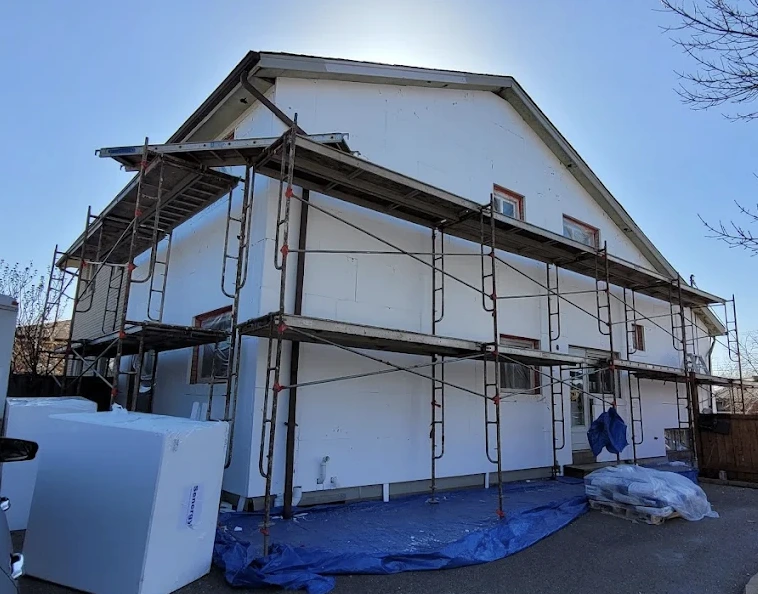
If you are planning a stucco project in Austin, one of the first decisions you will face is which type of stucco to use. The answer depends on your home's construction, your budget, your aesthetic goals, and how the material will hold up under Central Texas weather — which means intense UV exposure, summer temperatures regularly exceeding 100 degrees, and occasional heavy rain events.
Here is a straightforward comparison of the four main stucco types used on Austin homes.
Traditional 3-Coat Stucco
Traditional stucco is a cement-based system applied in three layers over metal lath: a scratch coat, a brown coat, and a finish coat. This is the oldest and most proven stucco system, and it remains the most common choice for residential construction in Central Texas.
**Pros:** - Extremely durable — a properly installed 3-coat system can last 50 to 80 years - Excellent fire resistance - Handles Austin's heat and UV exposure well - Wide range of finish textures and colors - Breathable — allows moisture to escape from the wall assembly
**Cons:** - Heavier than other systems, requiring adequate structural support - Longer installation time (each coat must cure before the next is applied) - More expensive than 1-coat systems
Traditional 3-coat stucco is the best all-around choice for most Austin homes, especially in neighborhoods like Westlake Hills, Tarrytown, and Barton Hills where long-term durability and curb appeal matter most.
1-Coat Stucco
One-coat stucco uses a pre-mixed, fiber-reinforced base coat applied in a single pass over foam backing board, followed by a finish coat. It became popular in production homebuilding because it is faster and less expensive to install.
**Pros:** - Faster installation, lower labor cost - Integrated insulation from the foam backing - Adequate performance for many residential applications
**Cons:** - Thinner profile makes it more vulnerable to impact damage - Shorter lifespan compared to 3-coat (typically 20 to 40 years) - More prone to cracking in areas with expansive clay soils, which are common across Travis County and Williamson County
One-coat stucco is a reasonable choice for budget-conscious projects, but homeowners should understand the trade-offs in longevity and impact resistance.
EIFS (Exterior Insulation and Finish System)
EIFS, sometimes called synthetic stucco, is a multi-layered system that bonds an insulation board to the wall, applies a base coat with reinforcing mesh, and finishes with a textured acrylic coating. It looks similar to traditional stucco but performs very differently.
**Pros:** - Superior energy efficiency — the continuous insulation layer can reduce cooling costs significantly, a major benefit through eight months of Austin summer - Lightweight, putting less stress on the structure - Flexible finish coat resists cracking better than cement-based stucco - Excellent design versatility with smooth, modern aesthetics
**Cons:** - Must use a drainage-type system to manage moisture (older barrier-type EIFS caused widespread moisture problems) - Requires a contractor specifically trained and certified in EIFS installation - Repairs must be done by someone experienced with the system
EIFS is an excellent choice for energy-efficient new construction and commercial buildings. Learn more in our detailed guide to EIFS vs. traditional stucco.
Acrylic (Synthetic) Finish Over Cement Base
Some homeowners choose a hybrid approach: a traditional cement-based scratch and brown coat topped with an acrylic finish coat instead of a cement finish. This combines the structural strength of traditional stucco with the flexibility and color retention of a synthetic topcoat.
**Pros:** - More resistant to hairline cracking than a cement finish - Better color retention under Austin's intense UV - Easier to clean and maintain
**Cons:** - Less breathable than a full cement system - Higher material cost for the finish coat
This hybrid approach is gaining popularity in neighborhoods across Central Texas where homeowners want the longevity of traditional stucco without the maintenance of periodically repainting a cement finish.
Which Is Best for Austin?
For most Austin homeowners, **traditional 3-coat stucco remains the best overall choice**. It is proven in our climate, handles the heat and UV exposure, and lasts generations when properly installed and maintained. If energy efficiency is a top priority, EIFS with a proper drainage system is worth considering, especially for new construction.
The most important factor is not the system itself but the quality of installation. A well-installed 1-coat system will outperform a poorly installed 3-coat system every time. That is why choosing an experienced local contractor matters more than choosing a product name.
Get Expert Guidance
At Star Stucco of Austin, we install and repair all four stucco types and can recommend the right system for your home, your budget, and your goals. As your Austin stucco installation contractor, we have completed over 9,000 projects across Central Texas. Contact us for a free estimate or call (512) 706-9699.
Frequently Asked Questions
What is the most durable type of stucco?
Traditional 3-coat cement stucco is the most durable, with a lifespan of 50 to 80 years when properly installed. It handles Austin's heat, UV exposure, and occasional heavy rain better than thinner systems like 1-coat stucco.
Is EIFS better than traditional stucco?
EIFS offers superior energy efficiency due to its continuous insulation layer, but it requires specialized installation and a drainage-type system to manage moisture. Traditional stucco is more forgiving and longer-lasting for most residential applications in Austin.
What type of stucco is best for Austin homes?
Traditional 3-coat stucco is the best all-around choice for Austin homes. It handles the intense heat, UV exposure, and expansive clay soils of Central Texas. For energy-focused new construction, EIFS with a drainage system is also an excellent option.