
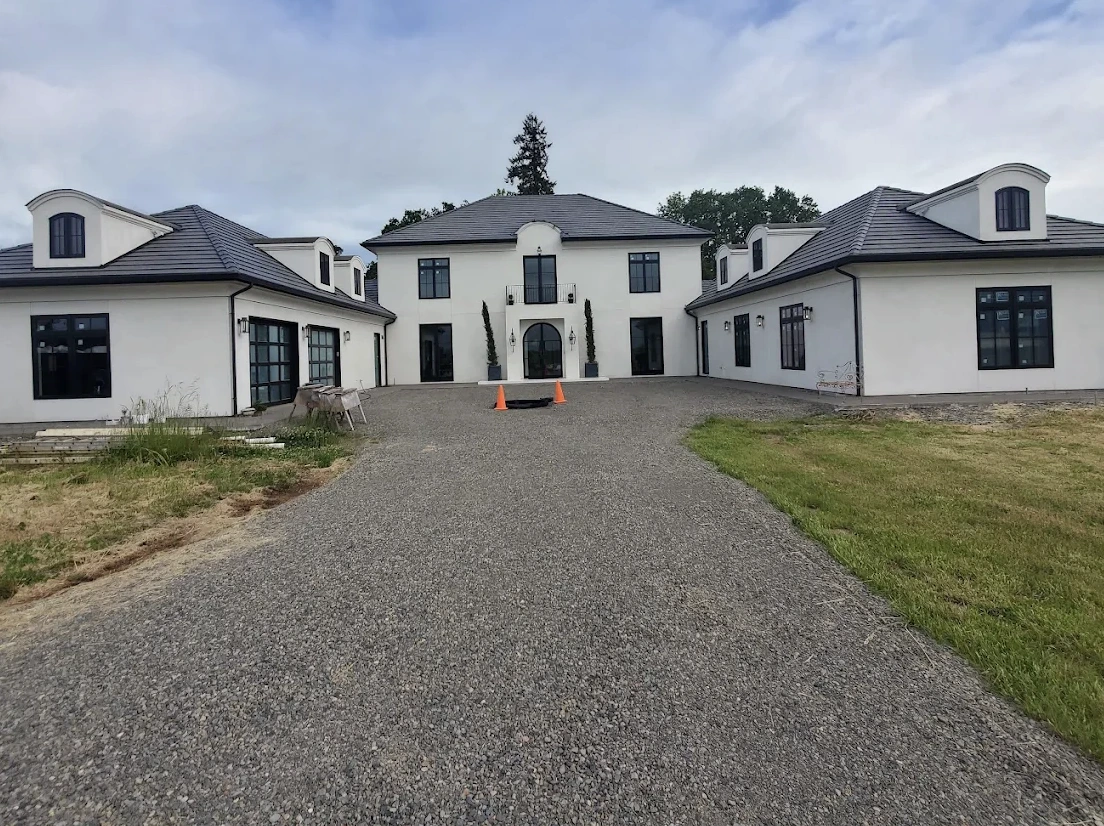
Stucco and brick are two of the most common exteriors on Austin homes, and homeowners weighing a new build or re-siding project almost always ask which one is better. The honest answer is that both are excellent materials with long track records in Texas — but they perform differently in terms of cost, aesthetics, maintenance, and how they handle the specific challenges of Austin's climate and soils.
This guide compares the two side by side so you can make the decision that fits your home, your budget, and your neighborhood.
Side-by-Side Comparison
| Feature | Stucco | Brick |
|---|---|---|
| Typical cost (installed) | $9–$15 per sq ft | $12–$20 per sq ft |
| Lifespan | 50+ years | 75–100+ years |
| Maintenance | Low — seal cracks, inspect annually | Very low — repoint mortar every 25–50 years |
| Insulation value | Moderate (high with EIFS) | Low without added insulation |
| Fire resistance | Excellent | Excellent |
| Weight | Moderate | Heavy — may require structural reinforcement |
| Design flexibility | Unlimited colors, textures, and shapes | Limited to brick sizes, colors, and patterns |
| Repairability | Patch and texture-match | Replace individual bricks; mortar repointing |
| Resale impact | Strong in stucco-heavy neighborhoods | Strong in traditional neighborhoods |
Both materials are durable and fire-resistant. The differences come down to aesthetics, cost, flexibility, and how each handles Austin's particular conditions.
Cost Comparison
Brick is typically the more expensive material to install. For a 2,000 square foot Austin home, a full brick exterior generally runs $24,000 to $40,000 or more, while three-coat stucco on the same home runs $18,000 to $30,000. The gap is driven by the higher material cost of brick and the labor-intensive process of laying each unit by hand.
Where the math gets interesting is in long-term cost. Brick requires very little maintenance over its lifespan — mortar joints may need repointing after 25 to 50 years, but the brick itself is essentially maintenance-free. Stucco requires periodic inspection, crack sealing, and possibly a recoat or repaint every 15 to 20 years. Over a 50-year horizon, the total cost of ownership narrows, though stucco still tends to come in lower overall for most homeowners. For detailed stucco pricing, see our guide to the cost to stucco a house in Austin.
Durability and Lifespan
Brick wins on raw longevity. A well-built brick wall can last a century or more with minimal intervention — drive through any older Austin neighborhood and you will see brick homes from the 1920s and 1930s that look as solid as the day they were built. Stucco, while very durable, has a more realistic lifespan of 50 to 75 years before a major refinish or re-application is needed, though well-maintained stucco can exceed that.
Both materials are vulnerable to the foundation movement caused by Austin's expansive clay soils. Brick shows this stress as stair-step cracks in the mortar joints. Stucco shows it as surface cracks, usually radiating from window and door corners. In both cases, the cracks are repairable — mortar joints can be repointed, and stucco cracks can be filled and texture-matched. Neither material is immune to soil movement, but both can be maintained through it.
Maintenance
Stucco requires more active maintenance than brick, but the tasks are straightforward. An annual exterior walkthrough to check for cracks and failed sealant, resealing joints every five to seven years, and an occasional elastomeric recoat keeps stucco in excellent condition. Our guide to stucco crack repair covers what to look for.
Brick is famously low-maintenance. The main task is monitoring mortar joints for erosion and scheduling repointing when needed — typically decades into the home's life. Brick does not need painting, recoating, or sealing in most applications. However, brick that has been painted becomes a maintenance item, because the paint must be maintained and eventually removed or reapplied.
Aesthetics and Design Flexibility
This is where stucco has a clear advantage. Stucco can be finished in virtually any color, mixed directly into the material so it does not peel. It can be applied in textures ranging from glass-smooth to heavily dashed, and it can wrap curved walls, arches, and complex shapes without visible joints. For modern, Mediterranean, Spanish Colonial, and Hill Country architecture — all of which are well-represented across Austin — stucco is a natural fit.
Brick offers a more traditional, structured look. The range of brick colors has expanded considerably, and pattern options like running bond, herringbone, and stacked bond provide variety. But brick is inherently rectilinear — curves and complex shapes require specialty cuts or a different material at transitions. For classic American Craftsman, Colonial, and farmhouse-style homes, brick delivers an authenticity that stucco cannot replicate.
Many Austin homes use both materials together. A brick base with stucco upper story, or a stucco body with brick accents and columns, is a combination you will see throughout neighborhoods like Tarrytown, Westlake, and the newer communities in Dripping Springs and Bee Cave. This blended approach lets homeowners get the aesthetic benefit of both materials.
Austin Climate Performance
Austin's climate puts specific stresses on both materials:
**Heat and UV** — Stucco handles Austin's intense sun well, especially with lighter integral colors that reflect heat. Its thermal mass absorbs heat during the day and releases it slowly at night, which helps moderate indoor temperatures. Brick also provides excellent thermal mass but is typically darker, which means it absorbs more heat on south- and west-facing walls. Neither material degrades from UV alone, though stucco's acrylic finishes may chalk over many years of exposure.
**Rain and moisture** — Brick is a porous material and does absorb water, but its mass and the air gap behind a brick veneer wall allow it to dry without problems in most conditions. Stucco sheds water from the surface and relies on a weather-resistive barrier and weep screed to handle the small amount that penetrates. In Austin's heavy spring downpours, both materials perform well when properly detailed — and both can fail if flashing and drainage are inadequate. See our guide to stucco water damage for more on moisture management.
**Soil movement** — Austin's expansive clay soils affect both materials. Brick shows movement as stair-step mortar cracks; stucco shows it as surface cracking. Both can be repaired. Stucco's continuous surface sometimes makes cracks more visible than brick's segmented mortar lines, which is worth considering in areas with known soil activity.
**Hail** — Brick shrugs off all but the most severe hail. Stucco can be dented or chipped by large hailstones, though the damage is typically cosmetic and repairable. EIFS, with its softer foam core, is more susceptible to hail impact than either traditional stucco or brick.
Which Neighborhoods Favor Which Material?
Austin's architectural character varies widely by neighborhood, and the prevailing exterior material often follows the dominant style:
- **Stucco-heavy areas** — Westlake Hills, Barton Creek, Lakeway, Spanish Oaks, Rough Hollow, and many modern developments in East Austin and South Austin where Mediterranean, Hill Country, and contemporary styles dominate.
- **Brick-heavy areas** — Northwest Hills, Allandale, Crestview, and older neighborhoods in Round Rock and Georgetown where traditional ranch and Colonial styles are common.
- **Mixed** — Tarrytown, Travis Heights, and newer master-planned communities like Belterra and Rough Hollow often feature homes using both materials in combination.
In neighborhoods where stucco is the norm, a stucco home fits the streetscape and tends to hold its value alongside neighbors. The same is true for brick-dominant streets. Going against the grain is not necessarily a problem, but it is worth considering for resale.
Resale Value
Both stucco and brick add resale value in Austin, but the impact depends on context. In premium stucco neighborhoods like Westlake and Barton Creek, stucco is expected and contributes to the home's perceived quality. In established brick neighborhoods like Northwest Hills, brick carries the same weight. Nationally, brick tends to poll well with buyers as a "premium" material, but in Austin's market — where stucco has deep architectural roots and is associated with high-end custom homes — stucco performs just as well in the right setting.
Making the Decision
Choose stucco if your home's architecture is modern, Mediterranean, Hill Country, or Spanish Colonial; if you want unlimited color and texture options; if you prefer a lower upfront cost; or if you are adding EIFS for energy efficiency. Choose brick if you are building a traditional American style and want the longest possible lifespan with the least maintenance.
Either way, installation quality matters more than the material itself. A well-installed stucco job outperforms a poorly installed brick job, and vice versa.
If stucco is the right fit for your project, Star Stucco of Austin can help. Explore our stucco installation services, learn about stucco finishes, or — as your local Austin stucco contractor — request a free estimate and we will walk you through your options.
Frequently Asked Questions
Is stucco cheaper than brick in Austin?
Yes, in most cases. Stucco installation typically runs $9 to $15 per square foot, while brick runs $12 to $20 per square foot. For a 2,000 square foot home, that difference can mean $6,000 to $10,000 or more in upfront savings. Stucco does require slightly more maintenance over its life, but the total cost of ownership is generally lower.
Does stucco or brick last longer?
Brick has a longer raw lifespan — 75 to 100 years or more versus 50 to 75 years for traditional stucco. Both materials can be maintained and repaired to extend their life well beyond those ranges. In practice, either material will outlast most homeowners when properly installed and maintained.
Which is better for Austin weather, stucco or brick?
Both perform well in Austin when properly installed. Stucco offers slightly better thermal mass with lighter colors that reflect heat, and it provides a seamless surface that sheds water effectively. Brick is more impact-resistant and requires less ongoing maintenance. The biggest climate factor for both materials in Austin is the expansive clay soil, which causes foundation movement that cracks both stucco and brick mortar joints over time.
Can I have both stucco and brick on my Austin home?
Absolutely. Many Austin homes combine both materials — a common approach is a brick base or accent with stucco on the upper story or main body. This blend works well architecturally and lets you get the aesthetic benefit of both materials. It is a popular choice in neighborhoods like Tarrytown, Westlake, and newer communities in Bee Cave and Dripping Springs.